
AGE-C launches film programme “Cinema and Intergenerational Dialogues” with Filmoteca Española
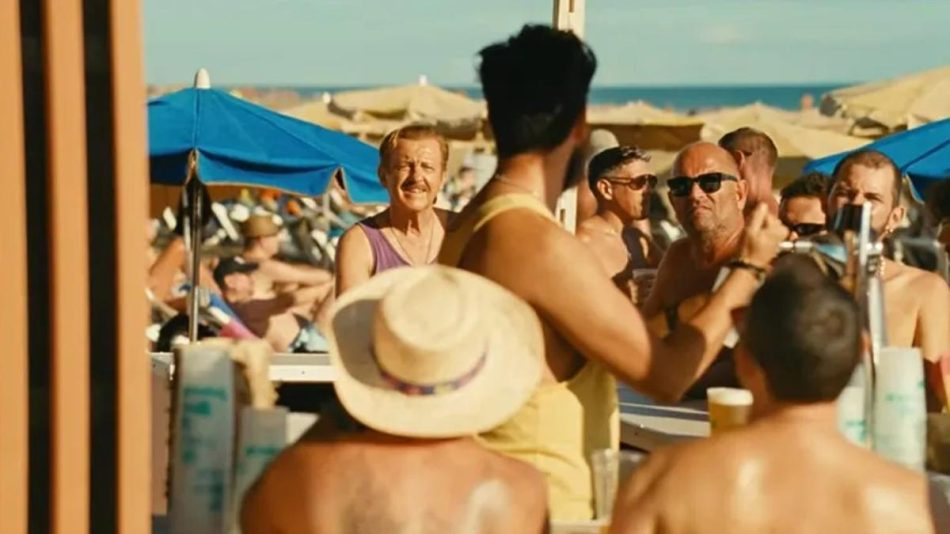
Dr Luis Freijo and Dr Belen Vidal, from the AGE-C UK unit based in King’s College London, have curated the film programme “Cinema and Intergenerational Dialogues. Growing Old on Screen” (Cine y diálogos intergeneracionales. Envejecer en la pantalla). The programme is organised in collaboration with Filmoteca Espanola, the Spanish National Film Archive, as part of the Filmoteca outreach programme, and will be screened at the Cine Doré, in Madrid, in the months of October and November.
The programme becomes part of the knowledge transfer activities of AGE-C and, specifically, of the project’s remit of finding an European intersection on how ageing is understood. As such, the programme situates Spanish cinema, with titles such as La madrastra (Gavaldon, 1974), the documentaries Meseta (Palacios, 2019) and Carrasca (Cortés Calahorra, 2018), and Polvo serán (Marqués-Marcet, 2025) and Maspalomas (Goenaga and Arregi, 2025), within a larger European context of films that deal with ageing, in which there are contemporary examples of filmmaking with ageing protagonists, represented in films from France (Quand vient l’automne, Ozon, 2024), Italy (5 e il numero perfetto, Igort, 2019), the UK (The Duke, 2020, Michell), and Hungary (Granny Project, Revesz, 2017). Likewise, the programme establishes an intergenerational dialogue between the films themselves, in which these contemporary films are place in conversation with earlier cinema, which ranges from silent German cinema (Der letzte Mann, Murnau, 1924), French comedy in the 1930s (La fin du jour, Duvivier, 1939), and the star-led documentary Marlene (Schell, 1984). The curation, which has been realised with the aid of the AGE-C database, intends to establish three axes of dialogue between the films in relation to ageing. A first axis concerns stars that age on screen, and how their personae, techniques and relation to the audience evolve over time. A second axis explores how identities, roles and film genres intersect in relation to ageing. Finally, a third axis touches on creativity in later life and how it aids with the transmission of memory, both personal and cultural.
Apart from Dr Freijo and Dr Vidal, the programme has been created with the input from AGE-C colleagues Dr Adrien Valgalier, Professor Raphaëlle Moine, Dr Andrea Virginás, Boglarka Angéla Farkas, and Dr Asja Makarevic. It has also benefit from expert input from Dr Asier Gil Vázquez, from Universidad Carlos III de Madrid, and from the head of programming at Filmoteca, Carlos Reviriego. It kickstarts on Thursday 1st October with an introduction from Dr Freijo and Dr Vidal, a screening of Maspalomas, and a Q&A with one of its directors, Aitor Arregi. It also features an introduction from Professor Moine of the French film La fin du jour on 4th October.
Written by: Dr Luis Freijo
Image credit: Maspalomas, Dir. Aitor Arregi and Jose Mari Goenaga, 2025, Spain. Distributor: BTeam Pictures.